

Rust Converter Before Oil Undercoating: Why the Formula Matters

You want to protect your vehicle, but the frame already has rust. Should you remove it, convert it or coat over it?
The answer starts with inspecting the metal, and knowing what protection you plan to apply afterward.
NHOU Rustoration® was developed to work in conjunction with NHOU® protective coatings. Its purpose is to prepare a suitable surface for the next treatment, rather than introduce a separate polymer sealer between the metal and the oil.
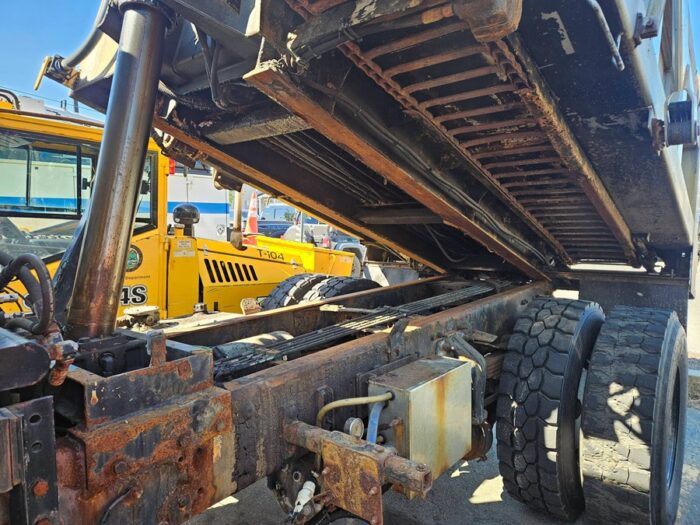
Rust Conversion and Rust Removal Are Different
Rust removal
Physically or chemically removes corrosion. Mechanical preparation may involve brushing, needle scaling, sanding or blasting, depending on the condition and location.
Rust conversion
Chemically treats remaining corrosion and changes the surface.
A converter does not replace preparation. Loose scale and failing coatings can prevent treatment from reaching a stable surface.
It also cannot restore metal that corrosion has consumed. Holes, severely weakened sections and suspected structural damage require evaluation before coating.
The objective is to protect serviceable metal, not conceal damage.
The Next Coating Should Influence Your Choice
Before buying a rust converter, ask:
Some converters are also primers or sealers. They leave a resin or polymer film intended to support a particular coating system.
That can be appropriate for their intended application. But it is a different approach from preparing a surface for penetrating oil protection.
For background, Henkel describes a resin-based converter that forms a paint-like protective film. This illustrates why “rust converter” does not identify one universal chemistry or finish.
Compatibility depends on the complete system.
What Makes NHOU Rustoration® Different?
NHOU Rustoration® uses zinc-phosphate conversion chemistry to prepare an etched surface for NHOU® oil-based protection.
That is an intentional part of its design. We want the following oil treatment to wet and penetrate the prepared surface texture and crevices, rather than rely on passing through an added polymer sealing layer.
The oil then helps displace moisture and establish a protective barrier that limits contact with moisture and oxygen.
| Part of the system | Its purpose |
|---|---|
| Mechanical preparation | Its purposeRemove loose rust and scale to expose a stable surface. |
| Rustoration® treatment | Its purposeChemically treat remaining corrosion and prepare an etched, zinc-phosphate surface. |
| NHOU® oil undercoating | Its purposeWet the prepared surface, penetrate accessible crevices and provide ongoing protective coverage. |
Preparation, conversion and protection are separate jobs. They need to work together.
Learn about the NHOU Rustoration® treatment system →
Zinc Phosphate Is a Surface Treatment
Rustoration® prepares a zinc-phosphate surface; it does not turn the entire steel component into zinc phosphate or rebuild its original thickness.
Zinc-phosphate treatment is an established approach to preparing metal for subsequent coatings. Henkel’s explanation of zinc phosphating provides background on that broader process.
That general information is not a performance test of Rustoration®. For our system, the important distinction is the combination of the conversion treatment, the absence of polymer sealers and compatibility with the following NHOU® oil application.
Other converters may use different chemistries, including tannate or phosphate reactions. It would be inaccurate to describe every conventional converter as iron-phosphate-based.

We Develop It, Manufacture It, and Use It
We are not just manufacturers and developers. We are consumers of our own products.
We use them in our Chichester, New Hampshire, service shop, working on vehicles exposed to the same road salt, brine and moisture our customers face.

That gives us practical feedback about preparation, application and maintenance. We see what technicians need from a product and what owners need to understand after treatment.
Rustoration® was developed with that complete process in mind: prepare the vehicle, treat the remaining corrosion and follow with compatible protection.
We have to use the system we recommend.
Start With Proper Preparation
Chemical treatment follows preparation; it does not replace removing loose scale.

Before applying Rustoration®:
- Inspect the metal and identify any repair needs.
- Remove loose rust, scale and failing paint.
- Remove dirt, grease, oil and salt contamination.
- Prepare and dry the surface according to the product instructions.
Do not apply converter over an existing oily surface and expect it to reach the metal underneath.
The amount of preparation depends on the vehicle. Aggressive corrosion may require more than a quick pass with a brush.
See NHOU’s protection guide for vehicles with heavy rust →
Apply the Protection That Completes the System
After conversion, follow Rustoration®’s instructions for residue removal, drying and the application window for the next coating.
The treatment process is not complete simply because the surface has changed color.
NHOU’s heavy-rust approach pairs preparation and Rustoration® with Original Oil Undercoating in Black. The oil provides the following protective layer and requires ongoing inspection and maintenance.


Rustoration® Rust Converter & Prep
Step 1: convert remaining rust after prep. 16 oz, 1 gallon and 5 gallon sizes. Application details and SDS on the product page.

Original Oil Undercoating
Step 2: penetrating oil protection, Black for heavy-rust vehicles. Reapplied every year.
Rustoration® is corrosive. Read the current label and safety data sheet (PDF), use the specified protective equipment and follow the handling instructions.
Three Questions Before You Choose a Rust Converter
Understand what remains on the surface after treatment.
Do not assume products from different systems are interchangeable.
Conversion does not repair structural damage or replace missing metal.
Protect What You Have, With a Complete Plan
A rusted frame needs more than a fresh-looking finish. It needs an honest assessment, appropriate preparation and compatible protection. That is why NHOU Rustoration® was developed to work with our coatings, and why we use that system ourselves.