

Undercoating Spray: How to Choose the Right Protection for Your Vehicle

You spot an exposed seam, a worn patch in a wheel well or a newly replaced part underneath your truck. You want to protect it before rust gets established.
An undercoating spray can help, but the right choice depends on the surface, the existing coating and the size of the job.

What Is Undercoating Spray?
Undercoating spray is a protective product applied beneath a vehicle or to other suitable areas identified in its instructions.
“Spray” describes how it is applied. It does not tell you whether the formula contains oil, lanolin, wax or a combination.
An aerosol can and a spray gun can both apply corrosion protection, but they serve different needs.
| Your project | What to consider | Where to start |
|---|---|---|
| Small exposed areas or touch-ups | What to considerA compatible aerosol may be convenient. | Where to startNHOU® V3 Touch-Up Aerosol |
| A complete DIY undercoating | What to considerBulk product, suitable equipment and access to the vehicle’s underside may be more practical. | Where to startNHOU® DIY Undercoating Kit |
| Hidden cavities or uncertain rust condition | What to considerA professional can assess preparation and application needs. | Where to startFind an applicator |
Aerosol Cans: Convenient for Targeted Work
Match your touch-up product to the existing treatment and follow its instructions.
Aerosols let you treat suitable areas without setting up a spray gun.
NHOU® V3 Touch-Up Aerosol puts the oil, wax and lanolin hybrid formula in a 12-ounce can. It is intended for targeted work and maintaining protection between full applications.
It may be useful for accessible wheel wells, seams and areas affected by repairs. Inspect the surface first and confirm compatibility with any existing coating.

NHOU® V3 Touch-Up Aerosol
Black, 12 oz. For wheel wells, rocker panels, seams and repaired areas between full applications.
Doing the Whole Vehicle? Plan for Coverage
A full undercoating requires more than spraying the surfaces you can easily see.
Preparation, access, equipment and application technique all affect the result. Seams and cavities may require suitable extension wands and careful application.

A product’s ability to creep can help it reach crevices, but it does not guarantee complete coverage or replace proper technique.

NHOU® DIY Undercoating Kit
Original Oil or V3, in Clear or Black, with a spray gun and an 18″ wand.
Not sure what equipment or quantity you need? Ask before ordering.
Choose the Formula Before the Finish
A fresh black coating can improve appearance, but appearance alone does not tell you how well a vehicle is protected.
Consider how the product behaves:
- Oil-based formulas: Check penetration, compatibility and reapplication requirements.
- Lanolin-based formulas: Compare the complete formulation, application instructions and maintenance needs.
- Wax-containing formulas: Check vehicle-condition and preparation requirements.
- Hybrid formulas: Find out which ingredients are combined and what the product is designed to do.
Read our guide to choosing oil, wax, lanolin and hybrid undercoatings →
Prepare Before You Spray
Choose the treatment after assessing the vehicle, not before.
Check for dirt, loose scale, damaged coatings and corrosion before application.
Light surface rust and deeply weakened metal are different problems. A protective spray cannot restore missing metal or repair structural damage.
Follow the selected product’s cleaning and surface-preparation instructions. If an older coating is peeling, or you are unsure about compatibility, have it assessed before adding another layer.
Use NHOU’s vehicle-condition guide to explore your options →
Road Salt Makes Maintenance Important
Road salt and liquid deicers help keep roads usable in winter, but they also expose vehicles to corrosive conditions.
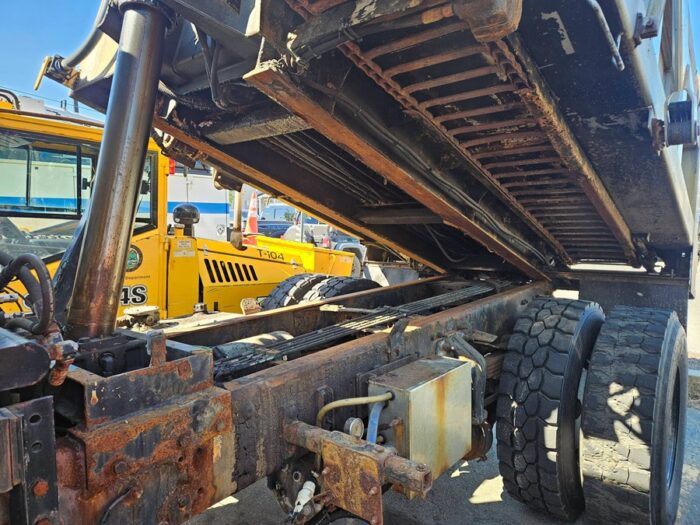
The Minnesota Department of Transportation explains how salt and liquid deicers are used. AAA’s 2017 research on deicers and vehicle rust damage also documents why corrosion deserves attention beyond a vehicle’s appearance.
Check your coating periodically, especially after repairs or heavy use. Follow its maintenance instructions, including guidance on washing, touch-ups and reapplication.
Three Questions Before You Buy
Start with inspection and preparation requirements.
That affects compatibility, quantity and equipment.
Understand the follow-up before choosing the product.
Take the Next Step
For targeted touch-ups, start with the V3 aerosol. For a complete DIY project, choose a kit. Prefer professional help? Find an NHOU® applicator near you.
Follow the product label and safety instructions for ventilation, protective equipment, application and areas to avoid.

